How to Identify Pure Desi Cow Ghee (Avoid Adulterated Ghee)

Ghee is a cherished staple in Indian kitchens and traditions, but recent alarming reports have exposed widespread adulteration, shaking consumer confidence across the country.
In Surat alone, authorities seized 25 tons of adulterated ghee made with vegetable fats and additives, with two people arrested and huge quantities of fake product confiscated by officials, warning the public about fake ghee in the market.

Even more disturbing, a CBI-supervised Special Investigation Team (SIT) has found that the Tirumala Tirupati Devasthanams (TTD) received adulterated ghee — often blended with palm oil and chemicals — for over five years, raising serious concerns about food safety and quality control in the ghee supply chain. and involving nearly 68 lakh kg of spurious ghee worth about ₹250 crore.
These incidents highlight how easy it has become for impure and fraudulent ghee to enter the food chain — making it more important than ever for consumers to know how to identify pure desi cow ghee and avoid adulterated products.
How Pure Organic Cow Ghee Is Made?
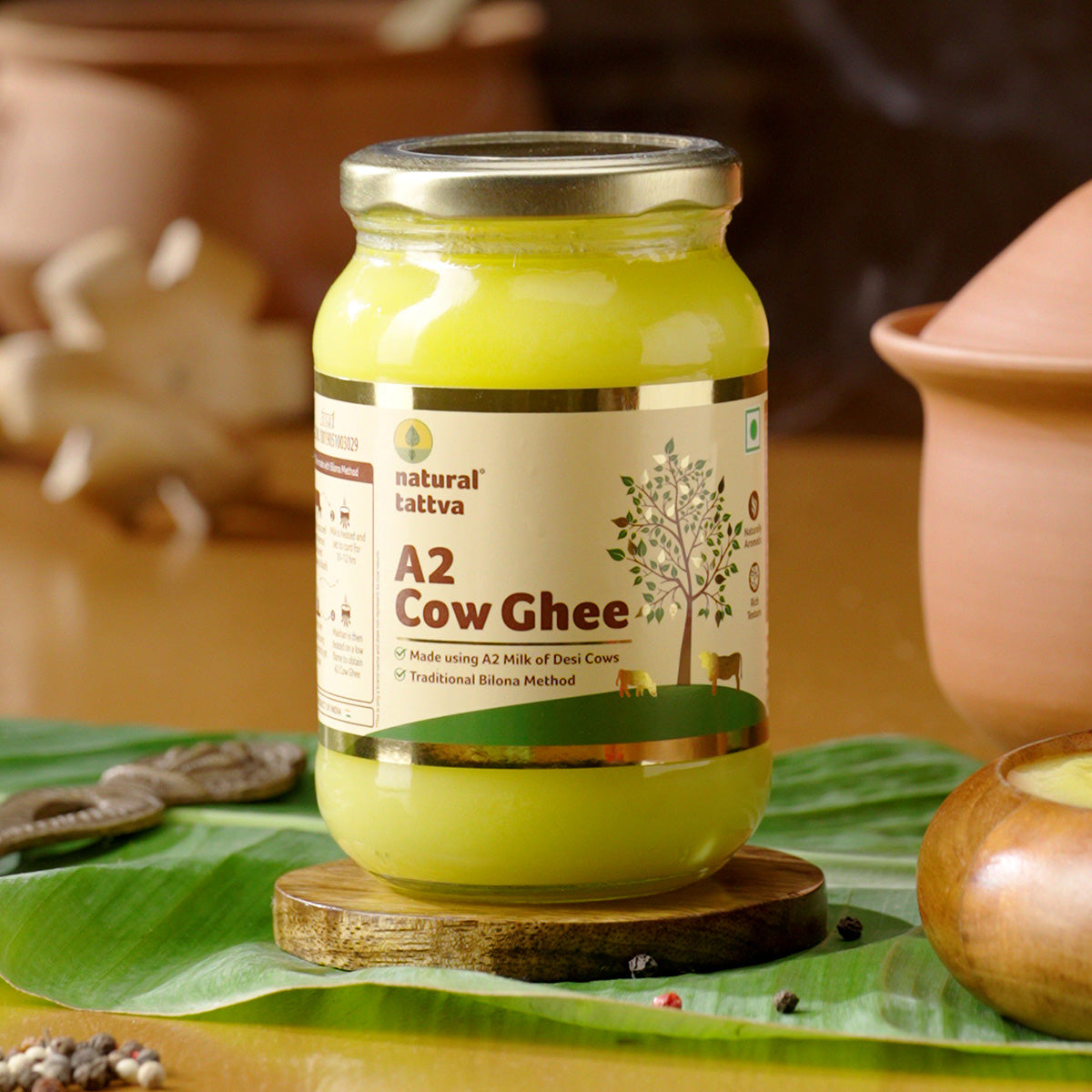
Pure ghee is made from cow’s milk using traditional methods, without chemicals, preservatives, or blended fats.
Authentic pure ghee is characterised by:
- A natural, rich aroma
- Soft, grainy texture
- Golden yellow colour
- Natural shelf stability
When consumed in moderation, pure organic ghee supports digestion and daily nourishment.
Health Risks of Adulterated Ghee
Adulterated ghee does not behave like natural dairy fat inside the body. When consumed regularly, it can create slow, cumulative health damage that often goes unnoticed in the early stages.
1. Triggers Chronic Inflammation
Palm oil, hydrogenated vegetable fats, and synthetic additives used in fake ghee are rich in poor-quality fats. These fats promote low-grade inflammation in the body.
Chronic inflammation is a root cause of joint pain, metabolic disorders, cardiovascular problems, and skin issues over time.
2. Disrupts Digestion and Gut Health
Pure cow ghee supports digestion by nourishing the gut lining and improving enzyme activity. Adulterated ghee does the opposite. Chemical residues and refined fats irritate the digestive tract, leading to bloating, acidity, heaviness, constipation, and reduced nutrient absorption. This is especially harmful for people with weak digestion, children, and elders.
3. Negatively Affects Cholesterol Balance
Natural ghee contains beneficial fatty acids when consumed in moderation. In contrast, adulterated ghee often contains trans fats and low-grade saturated fats that increase LDL (bad cholesterol) and reduce HDL (good cholesterol). This imbalance raises the risk of blocked arteries and heart disease with long-term use.
4. Increases Risk of Insulin Resistance
Refined vegetable fats and palm oil interfere with normal fat metabolism. Regular intake may reduce insulin sensitivity, increasing the risk of weight gain, fatty liver, and type-2 diabetes. This effect is more pronounced in sedentary lifestyles.
5. Adds Toxic Load to the Body
Adulterated ghee may contain pesticide residues, artificial colours, preservatives, or industrial fats not meant for daily consumption.
These substances increase the toxic burden on the liver and kidneys, affecting detoxification and hormonal balance over time.
6. Impacts Children and the Elderly More Severely
Children need clean fats for brain development and immunity, while elderly people need easily digestible nutrition.
Adulterated ghee stresses immature or weakened digestive systems, leading to poor immunity, fatigue, and nutritional deficiencies.
7. Ayurvedic View on Pure vs. Adulterated Ghee
From an Ayurvedic perspective, pure ghee is regarded as sattvic in nature and deepana, meaning it enhances digestion and strengthens agni (digestive fire). It nourishes the body tissues (dhatus), supports vitality, and promotes long-term balance and well-being.
In contrast, adulterated ghee is considered harmful in Ayurveda. It is believed to produce ama (toxins), obstruct the body’s channels (srotas), weaken digestive fire, and disrupt the body’s natural balance over time. Regular consumption of adulterated ghee may therefore negatively impact digestion, metabolism, and overall health.
How to Identify Pure Organic Ghee at Home
These traditional checks help you understand basic purity, though they cannot replace lab testing.
Texture Check
Organic ghee solidifies in cooler temperatures and melts easily when warmed.
Aroma Check
When heated, pure cow ghee releases a pleasant, nutty aroma, not a burnt or oily smell.
Palm Test
A small amount of pure ghee melts quickly when rubbed on the palm due to body heat.
⚠️ Home-based checks can indicate basic quality but cannot confirm purity. Laboratory testing remains the only reliable method to detect adulteration.
Identifying Pure Organic Ghee Through Certifications
Certifications are the most reliable way to confirm purity.
Always check for:
- Certified Organic status
- FSSAI compliance
- Lab-tested quality assurance
These ensure safety, authenticity, and compliance with regulations.
Why Organic Cow Ghee Is a Better Choice
Organic cow ghee offers higher safety because it starts at the farm level.
Why Organic Tattva Organic Cow Ghee?
- Pesticide-free: Tested for over 250 pesticide residues
Common pesticide risks in ghee include:
- Chlorpyrifos
- Fipronil
- Novaluron
- Certified organic with batch-wise testing
- Adulteration checks as per FSSAI standards for every batch
- Chemical-free processing
- Cows are fed organic fodder, free from synthetic chemicals
This ensures cleaner, safer ghee without hidden residues.
Bilona Method – Traditional Ghee Making Process
The bilona method is the most authentic way to make desi cow ghee.
Process Overview:
- Cow milk is converted into curd
- Curd is hand-churned to extract butter
- Butter is slowly heated to produce ghee
This slow method preserves aroma, texture, and nutritional integrity, resulting in naturally grainy and flavourful ghee.
Why Organic Ghee Is Better Than Regular Commercial Ghee
Commercial ghee is often produced quickly to maximise yield, which can affect quality.
Organic ghee:
- Contains no chemical residues
- Maintains natural nutritional value
- Comes from ethical, sustainable farming
- Follows stricter quality and safety standards
This makes organic ghee closer to traditional desi ghee used in Indian households.
Traceability – How Organic Tattva Ensures Purity
Organic Tattva provides full transparency for every pack of cow ghee.
Each pack includes a QR code that allows consumers to:
- View batch-wise lab test reports
This traceability removes uncertainty and builds trust.
How to Identify Organic Cow Ghee: Key Takeaways
Identifying pure ghee becomes easier when you:
- Organic Cow Ghee made with milk of indigenous breeds
- Prefer traditional methods such as the bilona method
- Choose certified organic products
- Verify lab tests and traceability
With strict quality controls and transparent sourcing, Organic Tattva offers pure Organic desi cow ghee you can trust.
Share