
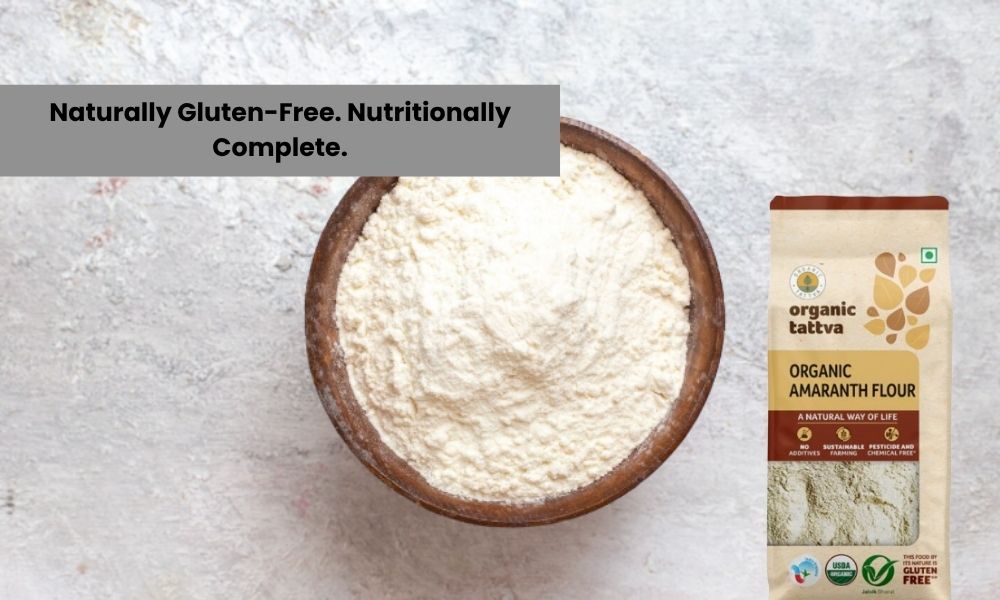
Amaranth Flour: Meaning, Protein Content, and Nutritional Value
Amaranth flour is a nutritious, gluten-free flour made from the seeds of the amaranth plant. It is an ancient grain, used in Indian kitchens for centuries. Many people know it as rajgira atta in Hindi.
This flour is packed with protein, fiber, and essential minerals, making it a smart choice for a healthy diet.
What is Amaranth Flour in Hindi?
In Hindi, amaranth flour is called rajgira ka atta or चौलाई का आटा. It is widely consumed during fasting days like Navratri and Ekadashi. People prepare rajgira puri, paratha, and laddoo with it.
Amaranth Flour in Other Indian Languages
- Amaranth flour in Tamil – அமராந்த் மாவு
- Amaranth flour in Telugu – ఉసిరికాయ పిండి
- Amaranth flour in Kannada – ಅಮರಂಥ್ ಹಿಟ್ಟು
- Amaranth flour in Gujarati – આમળાનો લોટ
These names help people across India identify this flour in their own language.
Amaranth Flour Benefits
Amaranth flour is not just a fasting food. It offers several health benefits for daily meals too.
- Supports digestion with high fiber content.
- Provides plant-based protein, good for vegetarians and vegans.
- Helps in bone health with calcium and magnesium.
- Aids in heart health due to its natural phytonutrients.
- Gluten-free, suitable for people with wheat intolerance.
Amaranth Flour Nutrition
The nutritional value of amaranth flour makes it a superfood. It contains:
- Amaranth flour protein content: Around 13–15 g per 100 g.
- Rich in iron, calcium, magnesium, and phosphorus.
- Contains essential amino acids like lysine.
- Balanced carbohydrates and dietary fiber for energy.
| Component | Per Serving | % RDA (per serve) |
| Serving size | 100g | |
| Serving per pack | 5 | |
| Energy (Kcal) | 406.04 | 20.3 |
| Total Fat (g) | 4.72 | 7.04 |
| Saturated fat (g) | 0.83 | 3.77 |
| Trans fat (g) | <0.005 | 0 |
| Cholesterol (mg) | <0.10 | |
| Sodium (mg) | 2.56 | 0.13 |
| Total Carbohydrates (g) | 70.1 | |
| Dietary Fiber (g) | 11.68 | 38.93 |
| Total Sugar (g) | 1.74 | |
| Added sugar (g) | 0 | 0 |
| Protein (g) | 14.95 | 27.69 |
| Potassium (mg) | 452.39 | 12.93 |
This makes it highly recommended for children, adults, and elderly people.
Amaranth Flour Recipes
You can prepare a variety of tasty and healthy dishes with this flour. Some popular amaranth flour recipes include:
- Rajgira paratha with potatoes or paneer stuffing
- Rajgira puris for fasting
- Amaranth flour laddoos with jaggery
- Pancakes and flatbreads for daily meals
- Cookies and baked goods as a gluten-free option
Amaranth Flour Means More than Just Fasting Food
Many people think amaranth flour means only a fasting ingredient. But it is much more. It is a complete nutritional flour that can be used regularly in cooking. You can mix it with wheat flour or millet flour for better taste and health benefits.
How to Use Amaranth Flour in Daily Diet
- Mix 20–30% amaranth flour with whole wheat flour for chapatis.
- Use it in baked goods for a nutty flavor.
- Prepare healthy snacks like cutlets or pancakes.
- Combine it with organic jaggery for traditional sweets.
Conclusion
Amaranth flour is a traditional grain with modern health benefits. Whether you call it rajgira ka atta in Hindi, harive hittu in Kannada, or rajgaro no lot in Gujarati, its value remains the same. It is rich in nutrition, easy to digest, and full of natural protein.
Choosing organic amaranth flour from trusted brands like Organic Tattva ensures purity and health. Include it in your daily meals, not just during fasting. It is a simple way to add strength, balance, and wellness to your diet.
FAQ
1. What is amaranth flour?
Amaranth flour is a gluten-free flour made by grinding amaranth seeds. In India, it is known as rajgira atta. It is rich in protein, fiber, and minerals.
2. What is amaranth flour in Hindi?
In Hindi, amaranth flour is called rajgira ka atta. It is commonly used during fasting days to make puris, parathas, and laddoos.
3. What are the benefits of amaranth flour?
Amaranth flour benefits include better digestion, stronger bones, high protein for muscle health, and being gluten-free, which makes it good for people with wheat sensitivity.
4. What is the nutritional value of amaranth flour?
The nutritional value of amaranth flour is impressive. It contains 13–15 g protein per 100 g, along with iron, calcium, magnesium, and dietary fiber.
5. Can I eat amaranth flour daily?
Yes, you can eat amaranth flour daily. You may mix it with wheat flour or millet flour for chapatis, or use it for healthy snacks and sweets.
6. Is amaranth flour good for weight loss?
Yes, amaranth flour is good for weight loss. It is high in protein and fiber, which helps you feel full for longer and reduces overeating.
7. How to use amaranth flour in recipes?
You can use amaranth flour in parathas, puris, pancakes, ladoos, cookies, and baked foods. Many people also mix it with regular atta for chapatis.
8. Is amaranth flour gluten-free?
Yes, amaranth flour is naturally gluten-free. It is safe for people with gluten intolerance or wheat allergy.
9. What is amaranth flour in Tamil and Telugu?
In Tamil, amaranth flour is called keerai maavu. In Telugu, it is known as thotakura pindi.
Share